Start With Cost and Safe Access
Cost depends on the area reached, how far sewage traveled, and which materials need removal or drying. Sewage can leave contamination on surfaces after the visible water is gone. Do not step into standing sewage or move wet items through clean areas. Mark where water is visible from a safe spot. A small, clearly limited area may look manageable, but uncertainty about its edge changes the decision. Continue only if the area and materials are safe to handle.
Step 2: At a small business in Maple Grove, pause access to affected work areas and note where sewage is visible. Do not let routine cleaning spread it into customer or staff spaces. Check from outside the affected area whether the backup reached more than one room. If its boundary is unclear, stop and arrange an assessment. The pros we connect you with can determine the cleanup scope before work proceeds. A larger footprint can mean more extraction, material removal, cleaning, and drying.
Check Materials and Cleaning Limits
Step 3: Sort materials by what they are, without handling sewage-soaked items. In a Maple Grove house, hard surfaces and absorbent flooring need different decisions. Porous materials such as carpet or drywall may need removal if sewage reached them; wiping the surface may leave contamination within. Note what appears wet or stained from a safe distance. If the affected material is uncertain, leave it for assessment. That judgment can change the cleanup plan and the amount of structural drying required.
Step 4: Consider whether safe cleaning is practical in the space. At a small shop serving Rogers, a crowded room or shared work area can make it hard to keep clean surfaces separate. Household gloves and cleaners do not settle whether contaminated materials are safe to handle. If cleaning would require entering the affected area, moving debris, or treating surfaces without following disinfectant label directions and contact time, stop. Professional sewage cleanup can include containment, removal, cleaning, disinfection, odor treatment, and drying.
Look for Hidden Spread and Separation
Step 5: Look for signs that water may have traveled beyond the visible floor. A damp baseboard, lifted flooring, or moisture at a wall edge can point to spread beneath or behind the surface. Moisture can pass through gaps around trim and enter wall cavities. Hidden wet materials may need removal, while affected surfaces need cleaning and disinfection before drying. When the spread is concealed, professional assessment can clarify which areas require work.
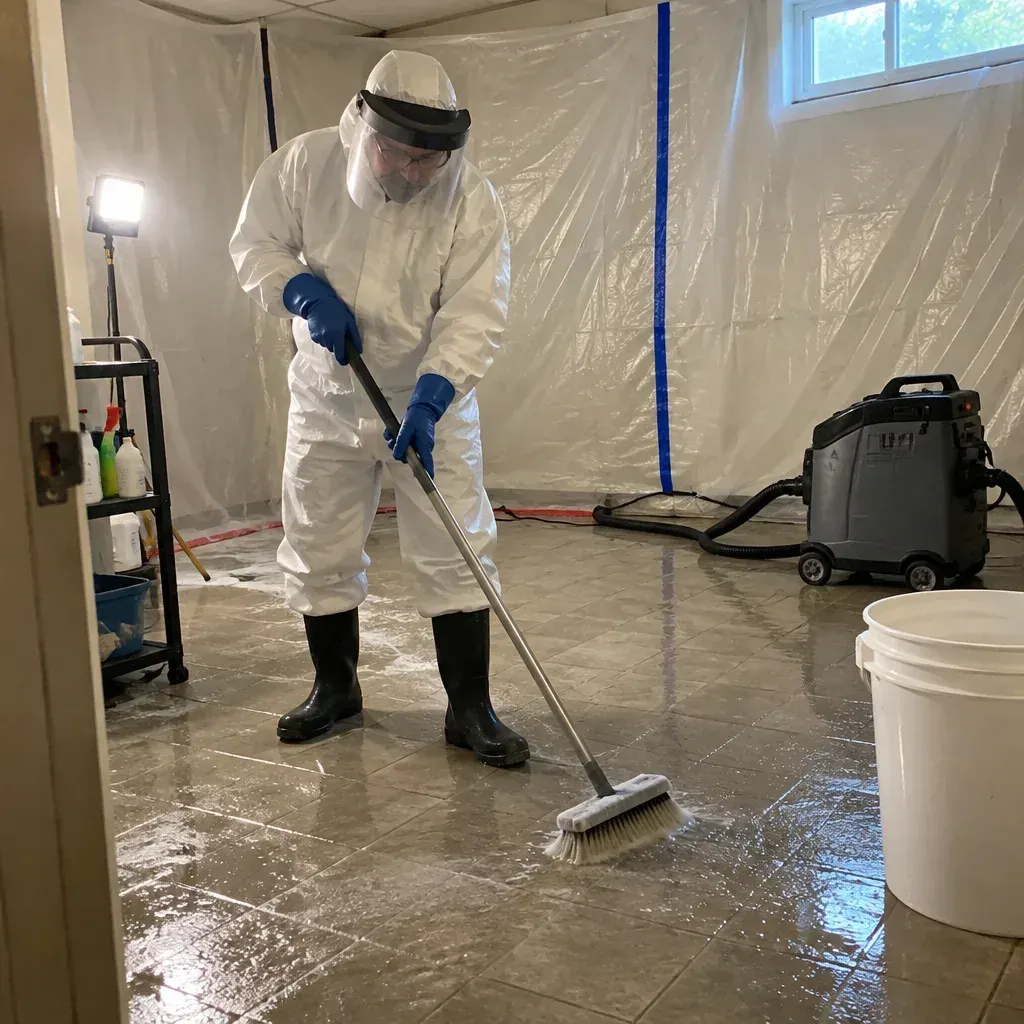
Step 6: Keep affected and clean areas apart while deciding what happens next. At a small business serving Rogers, a doorway between the backup area and open work space may be difficult to control. Containment helps prevent contaminated water and debris from reaching unaffected rooms. Avoid carrying tools, shoes, or waste across clean areas. If the space cannot be separated safely, keep people and pets away and contact a cleanup professional. A larger or connected area calls for a planned extraction and drying process.
Address the Source, Then Decide
Step 7: Treat the backup source as a separate task. The timing and location of a backup can help describe the problem during plumbing evaluation. If sewage returns after removal, pause cleanup decisions until the source is addressed. Do not assume the visible spill explains why the backup happened. The owner can arrange plumbing evaluation while keeping the affected area clear. Cleanup can proceed once the scope and source are understood well enough to plan the work.
Step 8: Decide based on safe access, known boundaries, and material type. If sewage reached several rooms, concealed spaces, or porous building materials, or if the owner cannot confidently assess the area, contact a qualified professional. In Maple Grove, the pros we connect you with can review the affected materials and outline extraction, removal, cleaning, and drying needs. Ask what areas the assessment covers and whether a plumber must address the source. When the scope remains uncertain, leave the cleanup to professionals.
Dealing with a sewer backup in your home?
Heavy rain can overwhelm drainage and contribute to a sewage backup. For a homeowner in Maple Grove, a wet floor or sewage odor signals a need to keep people and pets out. That applies near Territorial Park, Elm Creek Park Reserve, and Crow River alike. Assess the area only from a safe distance. Photograph visible damage from a safe distance before cleanup changes the scene. A plumber must diagnose and repair the backup’s source. Ask the pros we connect you with about cleanup scope, service coverage, availability, timing, and any visit charge. Confirm those details directly before arranging a visit.